
Sub-Total: $0.00
Horse Collagen Supplement: What the Latest Research Tells Us About Joints, Gut Health, and Recovery
If you’ve ever wondered whether a horse collagen supplement actually works — or whether the amino acids even absorb — new peer-reviewed research has a clear answer. A 2025 study published in Animals confirmed that hydrolyzed collagen is orally bioavailable in horses. Key structural amino acids reached measurable plasma concentrations within two hours of feeding . That same research window also brought new postbiotic data on hindgut pH stability. A comprehensive review of exercise-induced inflammation in athletic horses followed. So did emerging evidence on yeast-derived immune modulators. Together, these studies tell a coherent story about what performance horses actually need. They also explain why NutriSana EQ is built the way it is. This guide breaks down the science section by section. It connects each finding to real-world horse management and explains how the NutriSana EQ formula line is designed to address each biological system.
Part 1: Horse Collagen Supplement Science — Joint Health and Bioavailability
Why a Horse Collagen Supplement Starts With the Right Amino Acids
Before reviewing the new research, it helps to understand why collagen is the right foundation for an equine joint supplement. Collagen is the most abundant structural protein in the horse’s body. It accounts for roughly 30% of total body protein . It forms the primary matrix of cartilage, tendons, ligaments, joint capsules, bone, skin, and the gut lining. In a performance horse, every one of those tissues faces daily mechanical stress. Cartilage absorbs concussive force with every stride. Tendons and ligaments transmit explosive power through a barrel turn or a jumping effort. The joint capsule maintains the synovial environment that lubricates and nourishes articular surfaces. All of it depends on collagen. And collagen synthesis depends on a continuous supply of specific amino acids.
The three most critical amino acids for collagen are glycine, proline, and hydroxyproline. These form the repeating glycine-X-Y sequence of collagen’s triple helix structure. Glycine alone accounts for approximately one-third of all amino acids in collagen. Horses do not receive these amino acids in abundance from forage and standard grain rations. That gap is precisely why a targeted horse collagen supplement makes biological sense. It is also why dosing matters.
Does a Horse Collagen Supplement Actually Absorb? The Utrecht Study
The most common question about any horse collagen supplement is whether the amino acids actually reach the bloodstream. A 2025 study from Utrecht University answered this directly .
Researchers fed six Warmblood mares either 100g of hydrolyzed collagen (HC), 50g HC, or a control (0g) in a randomized crossover design. Blood draws occurred at baseline and every hour for eight hours after feeding, on days 7, 14, and 21. The 100g dose produced statistically significant elevations in plasma glycine, proline, hydroxyproline, alanine, arginine, glutamine, and serine compared to the control. The 50g dose also elevated glycine, proline, hydroxyproline, and arginine. Peak plasma concentrations appeared at approximately two hours post-feeding. This is consistent with pre-caecal small intestinal absorption. Critically, the 100g dose remained detectable for at least 24 hours .
Three conclusions follow from this data. First, hydrolyzed collagen is orally bioavailable in horses — the amino acids enter the bloodstream, not just the gut. Second, dose matters. The 100g dose produces a larger and longer-lasting plasma response than 50g. Third, once-daily feeding at 100g is supported by the 24-hour detectability window. That makes it practical for real-world barn management.
What Those Amino Acids Actually Do in the Horse’s Body
The plasma elevations from a horse collagen supplement are not just numbers on a lab report. They represent the raw material for critical biological processes throughout the body.
Glycine is the smallest amino acid and the most abundant in collagen. Beyond its structural role, glycine is a building block for creatine (essential for short-burst energy), glutathione (the body’s master antioxidant), and hemoglobin. It also directly supports gut barrier function by reducing intestinal permeability and reinforcing the tight junctions between gut lining cells.
Proline and hydroxyproline give collagen its structural stability. The conversion of proline to hydroxyproline requires vitamin C. This step allows collagen’s triple helix to form correctly. Without adequate proline and hydroxyproline, collagen synthesis fails at a structural level. These amino acids also concentrate in joint cartilage, where they contribute to compressive strength and tissue resilience.
Arginine is a conditionally essential amino acid. It is a building block for nitric oxide (NO), which regulates blood flow, immune function, and wound healing. In joint tissue specifically, arginine supports blood flow to the joint and cartilage metabolism. It also plays a role in cell growth and tissue repair.
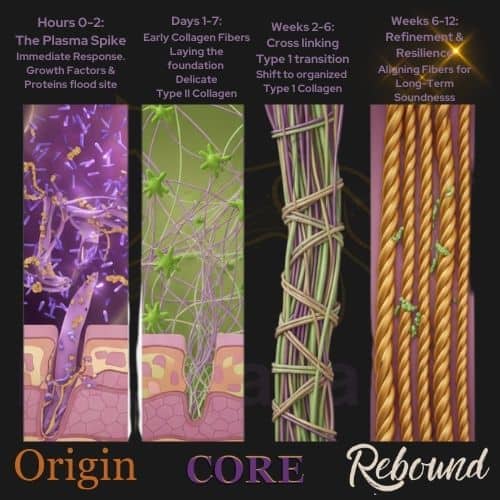
For the NutriSana EQ Core formula — designed for performance horses in daily training — this bioavailability data directly validates the collagen dosing strategy. For Rebound horses in active rehabilitation, connective tissue repair demands are highest. The case for the higher-strength formula becomes even more compelling there. And for Origin horses — young horses or those returning to work — the data confirms that even at the lower dose, key collagen amino acids reach the system.
Equine Osteoarthritis: Why Prevention Is the Only Real Strategy
The Horse published a February 2026 review by Stacey Oke, DVM, MSc, on emerging therapies for equine osteoarthritis . The piece covers advanced veterinary interventions including pooled umbilical-cord-derived mesenchymal stromal cells (MSCs) combined with hyaluronic acid. In a clinical study from the Ontario Veterinary College, horses receiving 10 or 20 million MSCs showed a full one-grade improvement in lameness scores over six weeks. The HA-only group showed a 0.5-grade improvement. That difference is clinically meaningful .
However, the review also makes something clear: no treatment has yet halted the progression of equine osteoarthritis . Every available intervention manages symptoms and slows progression. None reverses cartilage damage. None restores the joint to its original state. Osteoarthritis, once established, is a one-way door.
That reality reframes the role of a horse collagen supplement. NutriSana EQ is not competing with stem cell therapy. Instead, it operates in the space before those interventions become necessary. The biology of OA begins silently — years before clinical lameness. The balance tips between cartilage matrix synthesis and degradation. Inflammatory mediators like IL-1β and TNF-α begin to dominate the joint environment. Enzymes called matrix metalloproteinases (MMPs) break down collagen faster than it can be replaced. A horse collagen supplement provides the amino acid substrate for cartilage matrix synthesis. It supports the anti-inflammatory environment in the joint. It also helps manage the systemic oxidative load that contributes to joint inflammation. That is the daily work NutriSana EQ is designed to do.
Part 2: Horse Gut Health — Postbiotics, the Hindgut Microbiome, and Why Forage Comes First
The Hindgut Is Not Just a Digestive Organ
The equine hindgut — the large fermentation chamber that includes the cecum and large colon — is a complex, living ecosystem that directly controls a significant portion of the horse’s energy production, immune function, and overall health. A 2025 review in Frontiers in Microbiology synthesized the current state of equine gut microbiome science, and the numbers are striking .
Microbial fermentation in the cecum and large colon contributes an estimated 30–40% of total energy requirements through short-chain fatty acid (SCFA) production . These are not trace metabolites. They are a major energy source, particularly for horses on high-forage diets. Acetate fuels peripheral tissues directly. Propionate travels to the liver, where it is converted into glucose for energy. Butyrate is the primary fuel source for the colonocytes lining the large intestine. It also plays a critical role in maintaining the gut barrier that keeps bacteria and their toxins from entering systemic circulation.
Beyond energy, the gut microbiota shapes immune balance in ways that are only beginning to be fully understood. The gut-associated immune tissue (GALT) is the largest immune organ in the horse’s body, and its function is deeply connected to the microbial community surrounding it. Specifically, the resident microbiota preserves the gut lining, supports immune regulation, and helps prevent harmful bacteria from taking hold . When that community is disrupted — by antibiotics, high-starch diets, transport stress, or illness — the consequences cascade through the entire system.
Hindgut Acidosis: The Hidden Performance Killer
Here is a statistic that should stop every performance horse owner: approximately 60% of performance horses are affected by hindgut acidosis or associated clinical illness .
Hindgut acidosis occurs when sugars and starches escape small intestinal digestion and reach the hindgut in large amounts. The resident fiber-digesting bacteria cannot handle rapid carbohydrate breakdown. Instead, starch-fermenting bacteria multiply quickly and produce lactic acid as a byproduct. Lactic acid accumulates faster than the system can buffer it. pH drops. The environment becomes hostile to the beneficial fiber-fermenting bacteria the horse depends on for SCFA production and gut health.
The consequences extend far beyond digestive discomfort. Acidosis damages the gut lining and increases intestinal permeability — commonly called “leaky gut.” Bacterial toxins that would normally stay inside the gut can then leak into the bloodstream. This triggers a systemic inflammatory response. It is also one of the proposed mechanisms behind laminitis in horses on high-starch diets. Furthermore, acidosis disrupts SCFA production, compromising energy availability and gut barrier function at the same time. For performance horses on grain-heavy diets, hauling to competitions, and experiencing the physiological stress of intense training, the risk of subclinical hindgut acidosis is real and ongoing.
How Postbiotics Support Hindgut pH Stability
A 2026 study published in the Journal of Equine Veterinary Science tested a yeast-derived postbiotic (Saccharomyces cerevisiae) in a lab model designed to simulate equine hindgut conditions . The researchers used equine fecal samples to create gut-like cultures and exposed them to either a low-starch or a high-glucose environment. The postbiotic was added at two concentrations: 280 μg (T1) and 560 μg (T2).
In the high-glucose conditions, pH declined rapidly — consistent with the lactic acid fermentation that drives acidosis. Notably, the postbiotic showed a positive linear relationship with pH: higher doses produced less severe pH drops. At six hours, T1 showed higher pH than the control. At both six and twelve hours, T2 showed higher pH. Moreover, the postbiotic increased production of propionic acid, acetic acid, and butyric acid at twelve and thirty-six hours. It also significantly reduced D-lactate production in the low-NSC conditions .
D-lactate deserves specific mention here. Unlike L-lactate, which mammals metabolize efficiently, D-lactate is produced by certain bacteria during rapid carbohydrate fermentation. It accumulates in the hindgut during acidosis. Reducing D-lactate production is a meaningful clinical outcome. The study confirmed that the postbiotic did not prevent acidosis under extreme conditions. However, it meaningfully reduced its severity and supported beneficial fermentation products.
Kentucky Equine Research’s February 2026 overview of postbiotics provides helpful context . The term “postbiotic” refers to inanimate microorganisms or their components that confer health benefits on the host. This distinguishes them from probiotics (living microorganisms) and prebiotics (indigestible carbohydrates that feed beneficial bacteria). Key postbiotic components include short-chain fatty acids, bioactive peptides with antimicrobial and immune-supporting effects, and cell wall components that reduce harmful inflammation. Some postbiotics also produce natural compounds that target harmful bacteria while leaving beneficial microbes alone . The S. cerevisiae fermentation product highlighted by KER stabilizes the gut microbiota during nutritional stress, environmental stress, and transport stress alike. Those are exactly the conditions performance horses face every time they haul to a competition.
Yeast Cell Wall Fractions and the Butyrate Connection
A 2025 study in JEVS added another layer to the yeast story by evaluating a mannan-rich fraction (MRF) from yeast cell walls in healthy two-year-old Quarter horses . Using a rigorous 4×4 Latin square design, researchers fed 0, 1, 2, or 3g of MRF daily on top of an oat-based concentrate, with ad libitum forage access. MRF supplementation promoted butyrate-producing bacteria — specifically Lachnospiraceae and related taxa. It also increased butyrate kinase activity compared to the control group. Fecal secretory IgA (sIgA), which elevates in response to gut inflammation, was lower in the MRF-supplemented groups. There was also a trend toward reduced antibiotic-resistant genes in the MRF groups .
Butyrate is arguably the most important short-chain fatty acid for gut wall integrity. It is the primary fuel source for the cells lining the large intestine. Its production by resident bacteria is a key indicator of a healthy, fiber-driven microbiome. Furthermore, butyrate strengthens the tight junctions that hold the gut barrier together. It has direct anti-inflammatory effects and supports immune regulation throughout the gut. A microbiome that produces more butyrate is, in a real and measurable sense, a healthier and more protective microbiome.
Why Forage-First Is a Biological Imperative, Not a Marketing Line
The Frontiers in Microbiology review makes a point that deserves emphasis: diet is among the most powerful modulators of microbial community composition . The equine gut microbiome responds to dietary changes within days. A high-forage diet feeds the fiber-fermenting bacteria — Fibrobacter, Ruminococcus, Lachnospiraceae — that produce butyrate and maintain hindgut pH. A high-starch diet shifts the community toward starch-fermenting bacteria. Those bacteria produce lactic acid and disrupt the environment.
This is why the forage-first philosophy at the core of NutriSana EQ is not a marketing position. It is a biological imperative. No supplement compensates for a diet that is fundamentally wrong for the horse’s digestive physiology. The foundation is forage, then a mineral balancer, then targeted supplementation. NutriSana EQ operates in that third tier. It provides the tools to optimize the system that forage has built — not replace it. Learn more about how NutriSana EQ fits into a complete feeding program.
Part 3: Horse Recovery Supplement Science — Oxidative Stress and the Trained Horse
The Oxidative Cost of Training
Every time a horse exercises, it generates reactive oxygen species (ROS) — highly reactive molecules produced as a normal byproduct of aerobic metabolism. At low concentrations, ROS serve important signaling functions. They trigger adaptation responses, support the growth of new mitochondria, and stimulate the body’s own antioxidant defenses. This is part of how training makes horses fitter. At high concentrations, however, ROS cause oxidative damage to cellular membranes, proteins, and DNA. This is oxidative stress. It is a real, measurable contributor to exercise-induced tissue damage, delayed recovery, and performance-limiting disease.
The horse’s primary antioxidant defenses include glutathione peroxidase (GPX), which neutralizes harmful peroxides; superoxide dismutase (SOD), which converts damaging free radicals into less harmful compounds; and catalase, which breaks down hydrogen peroxide into water. These enzyme systems depend on dietary minerals — selenium for GPX, copper and zinc for SOD. Their activity can be measured in blood as an indicator of antioxidant capacity.
What the Antioxidant Supplementation Study Found
A 2025 study in the Journal of Equine Veterinary Science examined antioxidant supplementation in 18 young horses (average age ~29 months) beginning a training program . Horses were split into a supplement group and a placebo group. Both groups went through 30 days at maintenance, followed by 30 days of moderate work. Oxidative stress was measured using GPX, SOD, and a marker called TBARS — three of the most validated indicators of oxidative load and antioxidant capacity.
The honest finding is nuanced: the biggest driver of improved antioxidant capacity was reconditioning itself. By day 60, both groups showed improved GPX and TBARS response compared to day 30. This is consistent with the body adapting to training load . It is also the expected and healthy response — the body upregulates its antioxidant defenses in response to repeated oxidative challenge. However, the supplemented group showed additional benefits. They showed a tendency to mitigate the decrease in trot knee range of motion between days. They also had greater walk hock range of motion on day 60. Only the control group experienced a reduction in walk stride duration between days .
The interpretation matters here. Antioxidant supplementation does not replace the adaptation process. Instead, it supports the horse through the transition period. That is the window when oxidative load is high and endogenous defenses have not yet fully upregulated. For young horses in early training, and for horses returning to work after a layoff, that transition period is exactly when targeted support matters most. This is the population that NutriSana EQ Origin is designed for.
How the Trained Horse Manages Inflammation: The Acute Phase Response
A review published in the International Journal of Molecular Sciences in March 2026 provides the most comprehensive current picture of what happens inside the trained horse’s body during and after intense exercise . The focus is on endurance horses — athletes representing the extreme end of equine exercise physiology. However, the mechanisms apply to any horse working at a high level.
The central concept is the exercise-induced acute phase response — a whole-body inflammatory response that the horse mounts after intense work. It resembles the response to infection or injury, but it is driven by exercise. The key markers are serum amyloid A (SAA), a protein produced by the liver in response to inflammation, and signaling molecules including IL-1, IL-6, and TNF-α.
In horses completing the longest endurance distances (120–160 km), SAA concentrations increase 10-fold or more above baseline. This increase is proportional to the distance covered . IL-6 and IL-10 also elevate after long-distance competitions. The source of this inflammatory signal is the microinjuries that accumulate in muscle and tendon tissue during intense exercise. Every stride, every turn, every explosive effort creates microscopic damage to muscle fibers and connective tissue. This damage triggers the release of distress signals that activate the immune system and initiate the acute phase response. The inflammatory response is necessary — it drives the repair process that makes the horse stronger. But it carries a cost. Managing that cost is central to recovery.
The Anti-Inflammatory State: What Well-Trained Horses Develop
Here is the critical finding from the review: well-trained horses develop an “anti-inflammatory state” at rest . Through repeated exposure to the inflammatory stimulus of exercise, the horse’s immune system adapts. Over time, it becomes more efficient at resolving inflammation and more capable of returning to baseline quickly. Recovery happens faster. The horse also grows more resistant to the chronic low-grade inflammation that builds up when rest and nutrition are inadequate. This anti-inflammatory state takes approximately three months of consistent training to develop in young horses. It can be disrupted by overtraining, inadequate nutrition, or prolonged stress.
The implications for a horse collagen supplement and recovery program are direct. The goal is not to suppress the acute phase response — that response is adaptive and necessary. Rather, the goal is to support the horse’s ability to resolve that response efficiently and maintain the anti-inflammatory baseline that characterizes a well-conditioned athlete. Collagen amino acids in NutriSana EQ support tissue repair at the microinjury level. Antioxidant components help manage the oxidative side of the inflammatory response. Gut support maintains barrier integrity during the physiological stress of intense exercise. It is a system, and every component supports the others.
Part 4: Novel Ingredients on the Radar — Beta-Glucans and Immune Modulation
Beta-Glucans: Building the Equine Immune Case
The convergence of evidence around yeast-derived compounds in equine nutrition has been building for several years. A 2024 study in Animals added an important piece to that picture .
Researchers evaluated the effects of beta-glucan supplementation (10 mg/kg orally for 30 days) in horses with induced endotoxemia — a controlled model of the whole-body inflammatory response triggered by bacterial infection. Beta-glucans are structural compounds found in the cell walls of fungi, yeast, and certain grains. Immune cells recognize them through specific surface receptors, which triggers a cascade of immune activation and regulation.
The study found positive immune modulation in the beta-glucan-supplemented horses, with evidence of a modified inflammatory response to the endotoxin challenge . Liver and kidney enzyme values remained within physiological ranges throughout the 30-day supplementation period. This confirmed safety at this dose. The researchers acknowledge limitations — small sample size, no dose-response evaluation — but the safety data and the direction of the immune response findings are encouraging.
Why the Yeast-Derived Evidence Is Converging
What is particularly relevant for NutriSana EQ is the convergence of evidence across multiple yeast-derived ingredient categories. The postbiotic research, the MRF study, and now the beta-glucan data all point in the same direction: yeast cell wall components have meaningful, measurable effects on the equine immune system and gut environment. These effects operate through multiple mechanisms — direct immune modulation via pattern recognition receptors, selective promotion of beneficial gut bacteria, buffering of hindgut pH, and reduction of inflammatory markers. As the research matures, the question for formulation will be which specific fractions deliver the most consistent benefit. Dose and combination will matter too. This is an ingredient category worth watching closely.
Ingredient Summary: Evidence and Formula Relevance
The table below summarizes the current evidence base for each ingredient category and its relevance to the NutriSana EQ formula line.
| Ingredient | Primary Mechanism | Key Research Finding | Evidence Level | NutriSana EQ Formula |
| Hydrolyzed collagen peptides | Provides glycine, proline, hydroxyproline for connective tissue synthesis | Dose-dependent plasma elevations detectable for 24h | Strong | Core backbone of Origin, Core, and Rebound |
| S. cerevisiae postbiotic | Stabilizes hindgut microbiota; buffers pH; increases VFA production | Positive linear relationship between dose and hindgut pH in high-NSC conditions | Growing | Gut resilience support in Core and Rebound |
| Mannan-rich fraction (MRF) | Promotes butyrate-producing bacteria; supports microbial diversity | Increased Lachnospiraceae, butyrate kinase activity; reduced inflammatory sIgA | Moderate | Hindgut microbiome diversity support |
| Antioxidant blend (Vit E, Se) | Neutralizes ROS; supports GPX and SOD activity | Mitigated exercise-induced movement quality decline in young horses | Moderate | Recovery support across all formulas; primary focus in Origin |
| Beta-glucans (fungal/yeast) | Immune regulation via cell surface receptors; modulates acute inflammatory response | Positive immune modulation in equine endotoxemia model; confirmed safe at 10 mg/kg | Early | Emerging immune support ingredient |
The Bottom Line: This Is What Building a Real Horse Supplement Program Looks Like
Performance horses do not break down from one bad day. They get worn down from a thousand small misses — inconsistent nutrition, hidden inflammation, gut stress, and soft tissue wear-and-tear. Programs that look good on labels but do not hold up in real life are part of that problem too.
The research reviewed here tells a coherent story about what those small misses cost. It also shows what addressing them systematically can provide. A horse collagen supplement built on hydrolyzed peptides delivers confirmed bioavailable amino acids — the substrate for connective tissue maintenance and repair. Yeast-derived postbiotics buffer the hindgut against the acidosis that quietly undermines 60% of performance horses. Antioxidant support helps young horses navigate the oxidative challenge of early training without sacrificing movement quality. And the trained horse’s own biology — its capacity to develop an anti-inflammatory state through consistent, well-supported work — is the ultimate goal that all of this serves.
NutriSana EQ was built around this biology — not around trends, proprietary blends, or label claims that cannot be backed up. It was built around the understanding that the horse’s body has specific needs. Those needs can be met with specific, well-dosed ingredients. And the foundation is always forage — with targeted supplementation on top of it.
The science is catching up to what we have been doing. And that is exactly where we want to be.
Ready to find the right horse collagen supplement for your horse’s program? Explore the NutriSana EQ product line →
NutriSana EQ is a forage-first, fully transparent equine collagen supplement line designed for performance horses in daily training, rehabilitation, and early development. The Origin, Core, and Rebound formulas are tiered to match the horse’s specific demands — from the young horse just starting work to the hard-keeping rehab case that needs maximum support. Learn more about our formulation philosophy →
References
